The Ethics of AI: Bias, Governance, and Responsible Creation
Understanding how bias, accountability, and design choices shape the future of artificial intelligence

AI is not neutral — and pretending it is might be our biggest mistake.
Artificial Intelligence is already deciding:
Who gets a loan
Who gets shortlisted for a job
What news you see
How police patrol neighborhoods
Which voices are amplified — and which are silenced
Yet many people still believe AI is objective, logical, and fair.
That belief is dangerously wrong.
AI doesn’t think.
AI doesn’t judge.
AI reflects us — our data, our values, and our blind spots.
And that’s where ethics begins.
What Do We Mean by “AI Ethics”?
AI ethics is not about slowing innovation.
It’s about directing power responsibly.
At its core, AI ethics asks three fundamental questions:
Is the system fair?
Who is accountable when it fails?
Should this system exist at all?
These questions become urgent when AI systems scale to millions — or billions — of people.
1️⃣ Bias in AI: The Problem We Keep Underestimating
AI learns from data.
Data comes from humans.
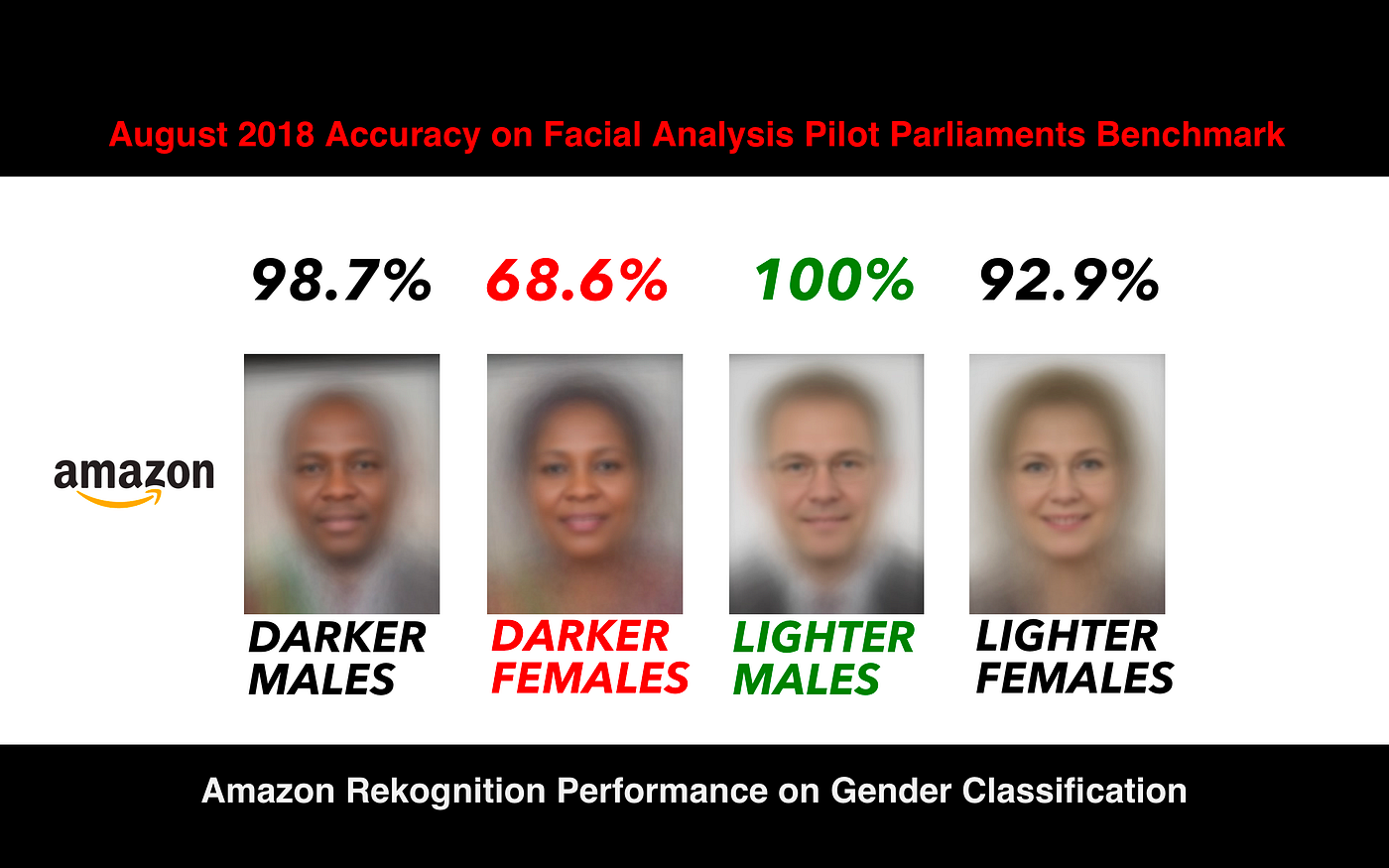
Humans are biased.
That simple chain explains most ethical failures in AI.
How Bias Enters AI Systems
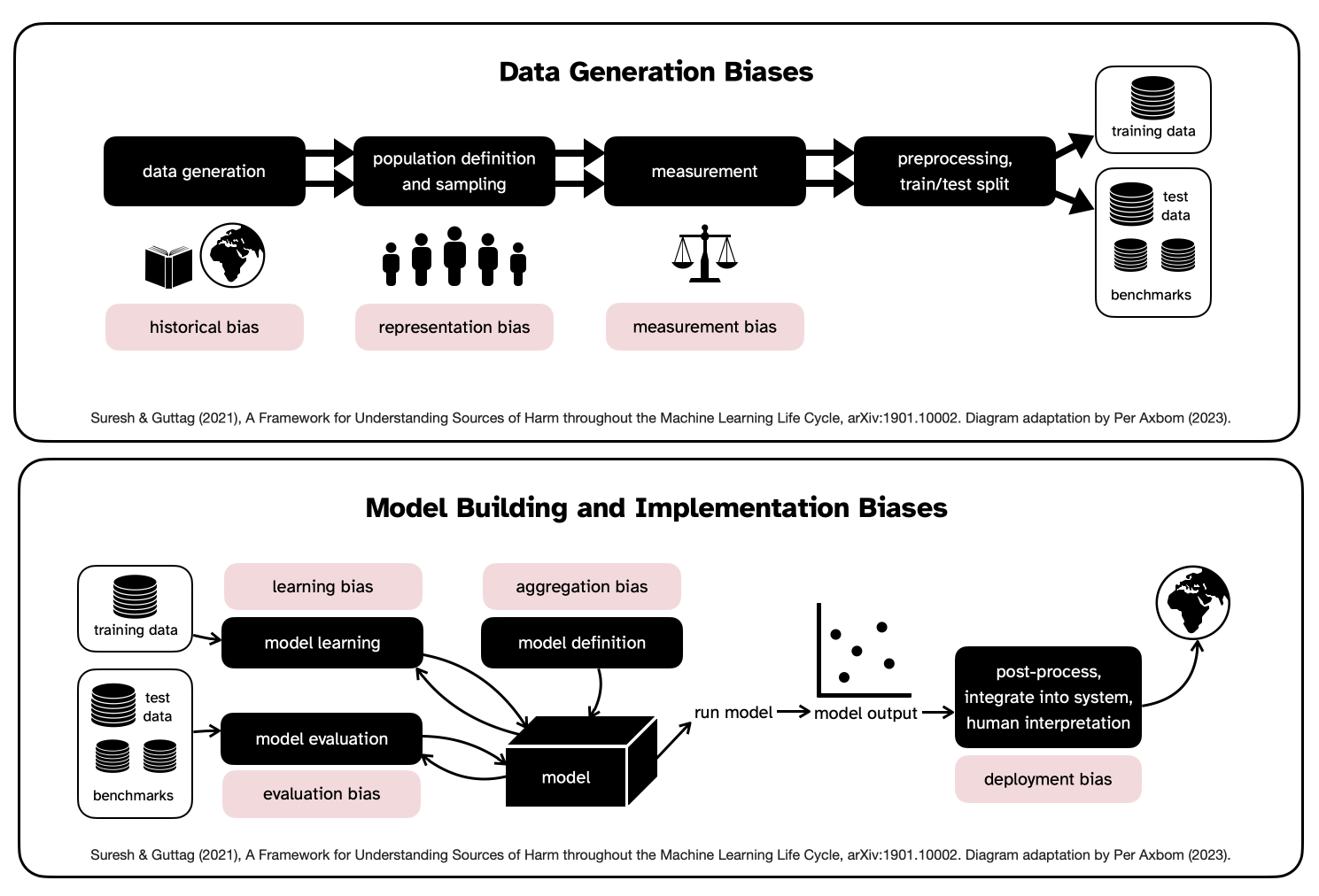
Bias can appear at every stage:
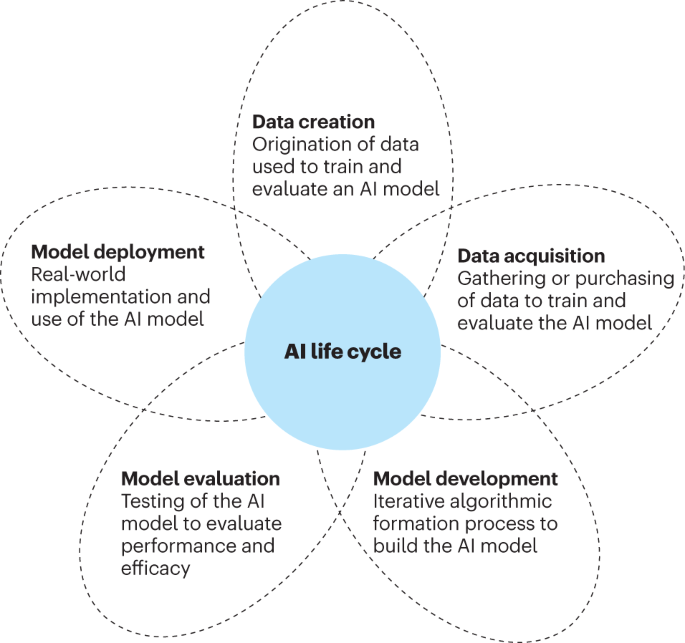
Data collection → underrepresentation of certain groups
Data labeling → human prejudice encoded as “ground truth”
Model design → assumptions built into algorithms
Deployment → systems used outside their original context
Example:
If a hiring model is trained on historical data from a male-dominated industry, it may learn that being male correlates with success — even if gender is never explicitly included.
The result?
Qualified candidates are filtered out
Discrimination scales automatically
No single human feels responsible
Why Bias Is Harder to Fix Than It Sounds
Many assume:
“Just remove the biased data.”
But bias is often:
Statistical, not obvious
Structural, not intentional
Contextual, not universal
Blindly “cleaning” data can:
Reduce accuracy
Introduce new unfairness
Hide problems instead of solving them
Ethical AI requires measurement, transparency, and continuous auditing — not one-time fixes.
2️⃣ AI Governance: Who Controls the Power?


Modern AI operates in a gray zone:
Too complex for users to understand
Too fast for laws to keep up
Too powerful to leave unchecked
This creates a dangerous imbalance:
Those who build AI hold enormous power over those affected by it.
What Is AI Governance?
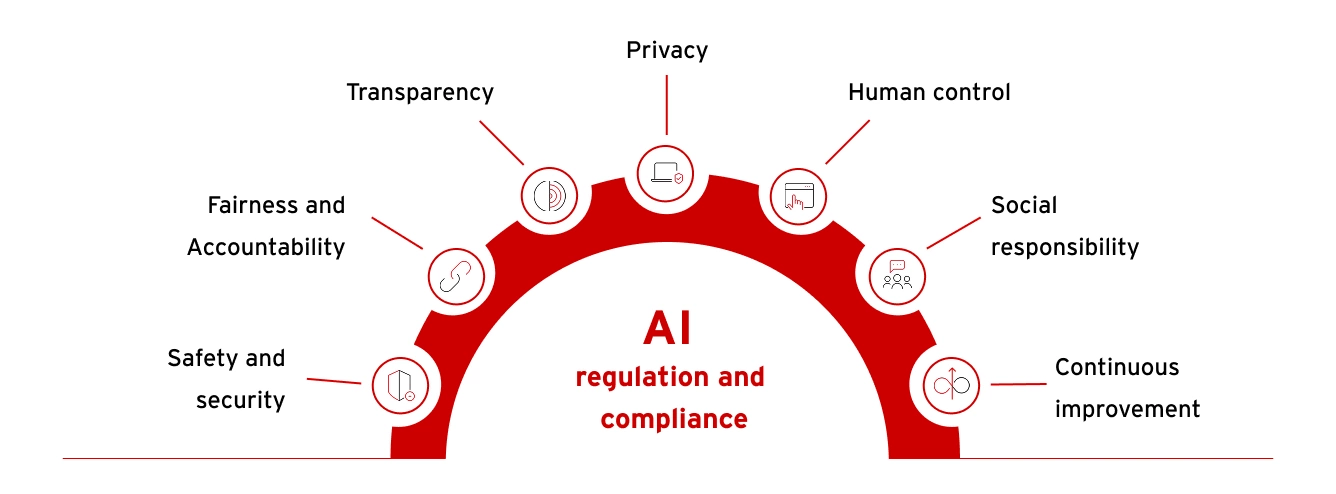
AI governance refers to the rules, standards, and oversight mechanisms that ensure AI is developed and deployed responsibly.
Strong governance answers questions like:
Who approves AI systems?
Who audits them?
Who can shut them down?
Who is liable when harm occurs?
The Accountability Gap
When AI systems fail, blame becomes unclear:
The developer?
The company?
The data provider?
The end user?
Without governance, responsibility dissolves — and victims are left without answers.
Ethical governance demands:
Clear ownership
Explainable decision pathways
Documented model behavior
Independent audits
3️⃣ Responsible AI Creation: Ethics by Design
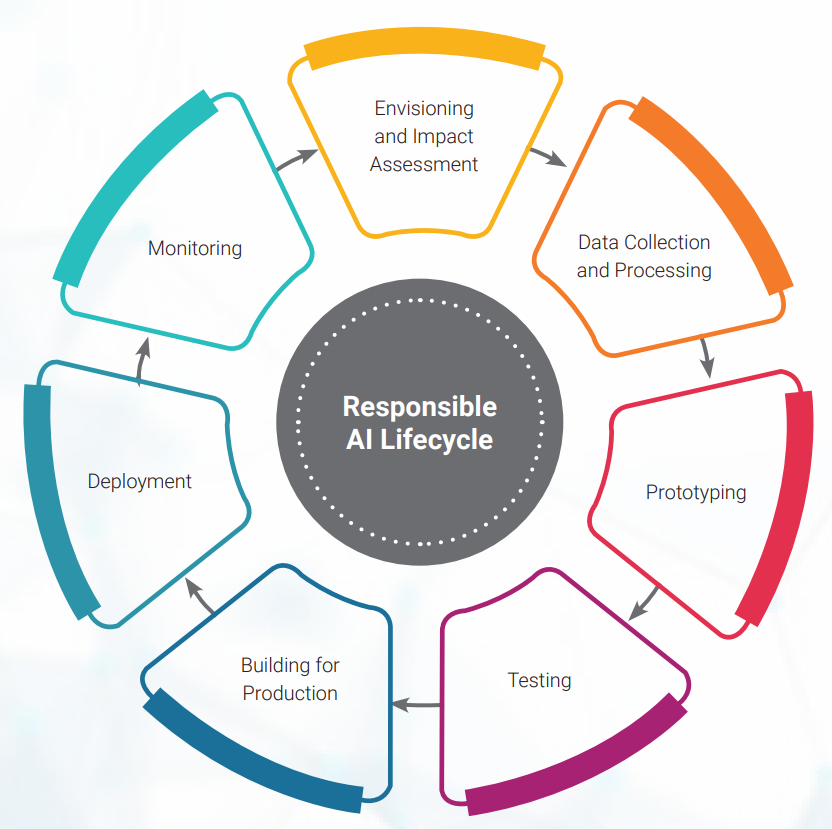
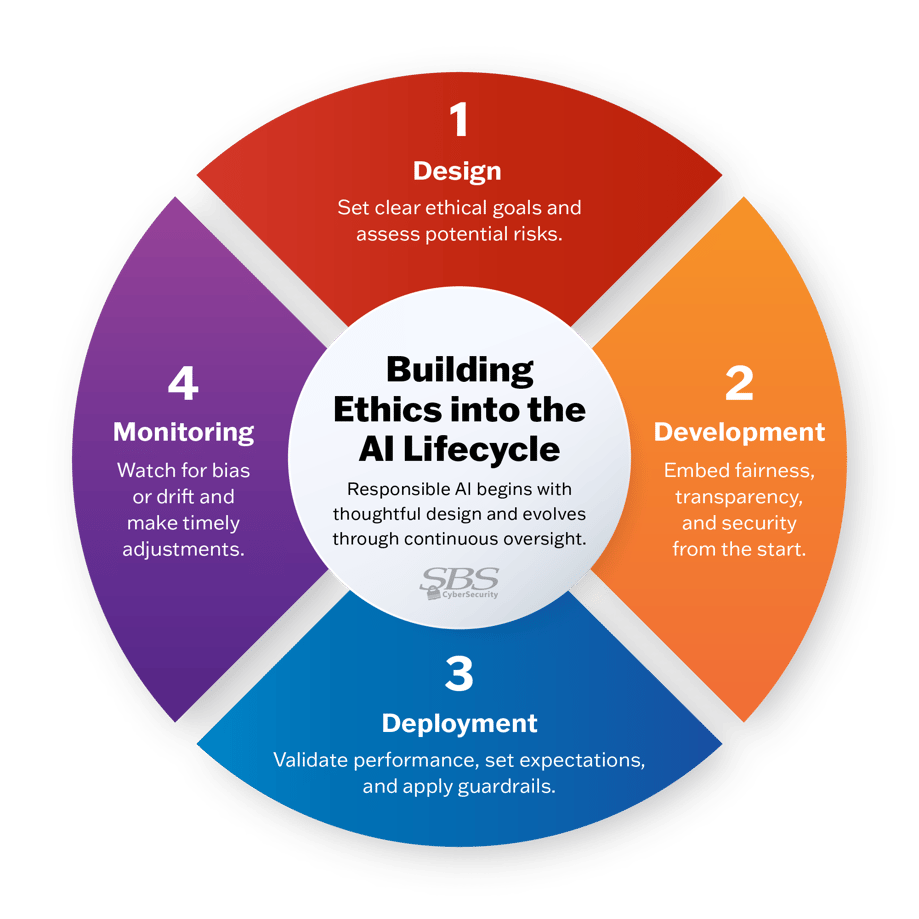
The biggest ethical mistake is treating ethics as a final checklist.
True responsibility begins before the first line of code is written.
Principles of Responsible AI
1. Purpose Limitation
Ask:
Why are we building this?
Not:
Can we build this?
Some problems should not be automated.
2. Human-in-the-Loop
High-stakes decisions should never be fully automated, such as:
Medical diagnoses
Legal judgments
Financial exclusion
AI should assist humans — not replace accountability.
3. Transparency & Explainability
If users cannot understand:
Why a decision was made
What data influenced it
Then the system should not be trusted with serious outcomes.
4. Privacy by Default
Ethical AI:
Collects minimal data
Avoids unnecessary retention
Protects users even from the system itself
Privacy is not a feature.
It is a baseline responsibility.
5. Continuous Monitoring
Ethics is not static.
Models drift.
Data changes.
Society evolves.
Responsible AI requires ongoing evaluation, not one-time approval.
The Hard Truth: Ethical AI Is Slower — and That’s a Good Thing
Unethical AI moves fast:
Faster deployment
Faster scaling
Faster profits
Ethical AI moves deliberately:
With review
With friction
With accountability
Speed without ethics leads to:
Public backlash
Regulatory crackdowns
Loss of trust
In the long run, trust is the most valuable AI asset.
Who Is Responsible for Ethical AI?
The uncomfortable answer: everyone involved.
Developers → design responsibly
Companies → prioritize long-term impact
Governments → regulate wisely
Users → demand transparency
Ethics is not a blocker to innovation.
It is what makes innovation sustainable.
A Simple Ethical AI Test
Before deploying any AI system, ask:
Could this system cause harm at scale?
Would I accept this decision if it affected me?
Can the decision be clearly explained?
Is there a way to appeal or override it?
Are we willing to take responsibility if it fails?
If any answer is “no” — stop and rethink.
Final Thought: The Future of AI Is a Moral Choice
AI will shape:
Economies
Democracies
Human opportunity
But technology does not choose values.
We do.
The real question is not:
“Can AI be ethical?”
The real question is:
“Will we choose to make it so?”
📢 If this article helped you:
Share it with someone building AI
Start ethical conversations early
Build technology that respects humanity